

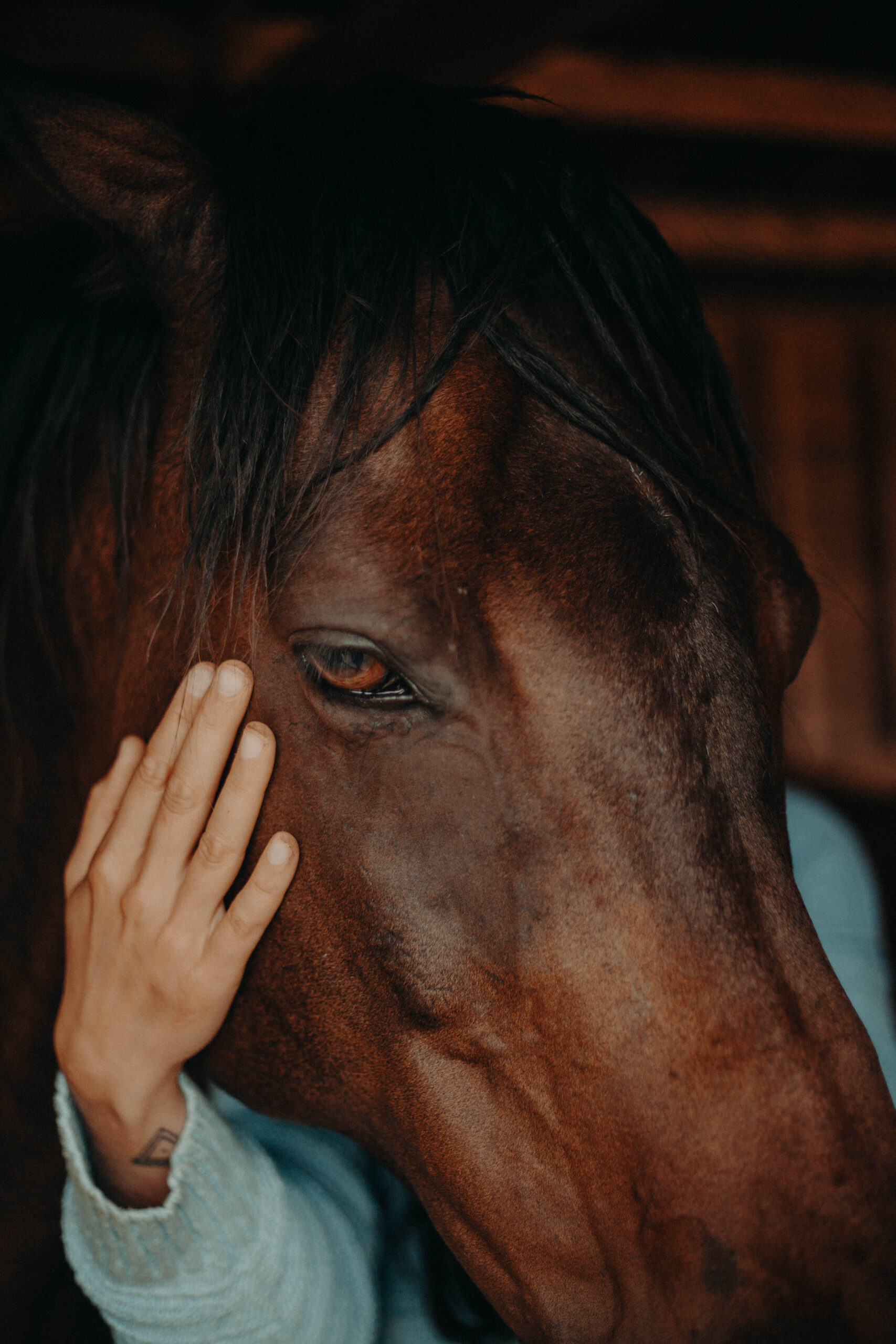
Equine Cranial Nerves
Nerves are pathways which carry electric impulses and information between the brain and the rest of the body. Horses, like most vertebrates have 12 cranial nerves which originate in the brain stem (rather than the spinal cord like other nerves in the body) and spread throughout the facial structures in pairs running down either side of the face and neck, with the exception of Cranial Nerve number X, the Vagus nerve, which travels from the brain stem down through the thorax (chest), into the abdomen.
Cranial nerves have a variety of functional roles, including sensory and motor purposes. Sensory nerves carry information from the face to the brain stem, motor nerves help facilitate muscle movement. Some Cranial nerves are both sensory and motor nerves.
Cranial nerves are part of the peripheral nervous system, of which the autonomic nervous system (ANS) is a component. The ANS controls involuntary physical processes such as digestion, heart rate, respiration, and blood pressure.

Nerves are an incredibly important part of the whole picture of a horse’s body, looking at the images provided it is easy to see how a Cranial Nerves can be impacted by bridles, head collars, and bits etc. It is important to have images like these in mind when we are handling our horse’s heads and mouths and to ensure we are working with the body rather than against it, i.e. be as light handed and mindful as possible rather than enforcing overt amounts of pressure when or where it may not be needed, as what happens in the head doesn’t just stay in the head!
Cranial structures which are compressed or over pressurised for long periods of time will inevitably affect the performance of the Cranial nerves, which in turn will affect how horses take in and interact with their environment, and their sense of overall wellbeing. As non-predatory animals horses need to feel safe, Cranial Nerves play a major role in a horse’s sense of calm and their perception of the outside world, due to their link with the ANS. A Horse needs to have a full range of function within the Cranium least of all because of its instinctual desire for safety and to engage with its environment (that includes you) in as optimum a way as possible.
 We see an example of this whole-body effect with CNXI, the Accessory nerve, which extends from the brain stem into the neck via the foramen magnum (an opening at the base of the skull), assisting with certain muscular functions of the neck. If this nerve is impeded at its cranial root in any way, then range of motion in the neck will be affected as well. This could result in compensation through the neck, into the shoulders, sternum, then ribs and potentially the pelvis.
To feel safe horses, and us, need to feel balanced, comfortable, at home in their bodies the way they are designed to be.
Headshaking
Another, perhaps more well-known example of cranial nerves and their powerful role is the link between headshaking and an overactivity of the maxillary branch (maxilla = upper jaw) of the Trigeminal Nerve, a sensory nerve which innovates the teeth, providing sensory information to the face and muzzle. The Trigeminal Nerve runs down the front of the face all the way to the way to fine structures of the nasal cavity. Horses, as nasal breathers, require an excellent function of this nerve at all times.
However, what does the nose band tighten around? The upper and lower jaw. Where do some Bits apply pressure? The hard palate of the mouth which sits underneath the Maxilla.
CranioSacral Therapy
When the Cranium is treated with CranioSacral therapy, or any other therapy which addresses the head, structures which may be compressed, stress, or which are holding trauma and whose movement is inhibited, have the chance to release, find their breathe again, and to create the natural space required for the nerves to return to their normal function. Supporting the peripheral nervous system, and an overall state of wellbeing and longevity. CranioSacral therapy provides an organic opportunity for healing and recovery.
EVERYTHING IS CONNECTED.
Every single piece of tissue, bone, blood vessel, muscle, tendon, ligament, etc is all connected, there is no point on the body where there is a break in this flow of structure and therefore, energy. Energy which has a right to flow. The Cranial nerves are part of a greater art piece instructed by consciousness itself. Delicate interfaces with the divine.
Cranial nerves:
CNI – Olfactory
CNII – Optic
CNIII – Oculomotor
CNIV – Trochlear
CNV – Trigeminal
CNVI – Abducens
CNVII – Facial
CNVIII – Vestibulocochlear
CNIX – Glossopharyngeal
CNX – Vagus
CNXI – Accessory
CNXII – Hypoglossal